Table of Contents
- Introduction
- Understanding the Basics of Poker Strategy
- Key Components of a Winning Strategy
- Hand Selection
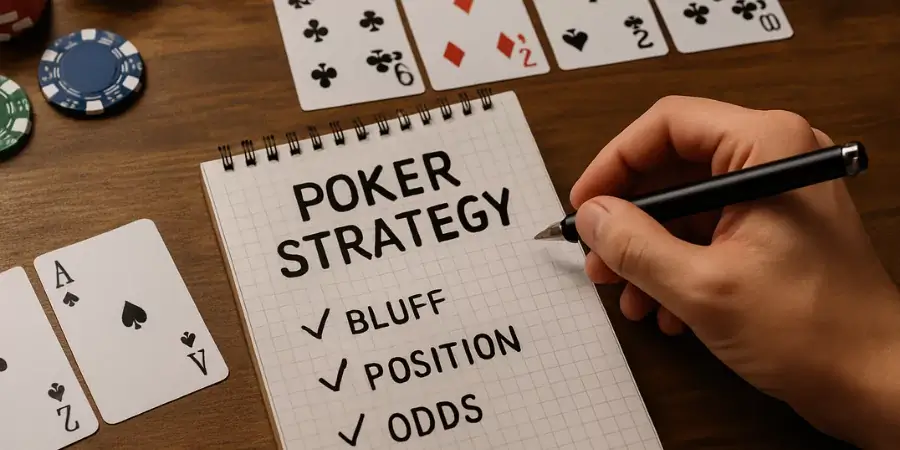
- Position Awareness
- Bluffing and Semi-Bluffing
- Reading Opponents
- Adjusting to Different Game Formats
- Cash Games
- Tournaments
- Bankroll Management
- Common Mistakes to Avoid
- Conclusion
- FAQs
Introduction
Poker is a game of skill, psychology, and discipline. While luck plays a role in the short term, consistent winners rely on strategic thinking and long-term planning. Whether you’re playing online or live, creating a solid poker strategy is key to your success at the table.
Understanding the Basics of Poker Strategy
A strong poker strategy begins with a solid foundation in the rules, hand rankings, and basic tactics. You must understand:
- The strength of different starting hands
- How betting rounds work
- The importance of pot odds and implied odds
- The different styles of play (tight/aggressive, loose/passive, etc.)
Building your strategy from these basics will ensure that your decision-making improves with each hand.
Key Components of a Winning Strategy
Hand Selection
Not every hand should be played. Successful players are disciplined in choosing which hands to enter the pot with. For example:
- Play premium hands like A-A, K-K, Q-Q, and A-K strongly from any position.
- Avoid weak hands like 7-2 offsuit or low unsuited connectors.
- Use suited connectors and small pairs cautiously, especially in early position.
Position Awareness
Your position at the table is crucial. The later you act in a betting round, the more information you have. Generally:
- Play tighter from early positions
- Expand your range in middle and late positions
- Use position to control the pot and extract value
Bluffing and Semi-Bluffing
Bluffing is essential but should be used selectively. Effective bluffs:
- Tell a believable story based on betting patterns
- Work better against observant opponents
- Are most effective when used sparingly
Semi-bluffing—betting with a drawing hand—can add pressure and give you multiple ways to win a pot.
Reading Opponents
Observation is critical in poker. Focus on:
- Betting patterns
- Timing tells
- Player tendencies (tight vs. loose, aggressive vs. passive)
Use this information to adjust your strategy and gain an edge.
Adjusting to Different Game Formats
Cash Games
In cash games, you’re playing deep stacks. Strategies here include:
- Focusing on value betting and extracting maximum value
- Avoiding marginal situations unless the odds are clearly in your favor
- Maintaining consistency and discipline
Tournaments
Tournament poker requires a more dynamic approach:
- Adjust your play based on stack size and blinds
- Survive early stages by playing tight
- Get aggressive in later stages, especially near the bubble
- Understand ICM (Independent Chip Model) for final table play
Bankroll Management
Even the best players can go on losing streaks. Proper bankroll management protects you from going broke:
- Never risk more than 5% of your bankroll on a single buy-in
- Move down in stakes when facing a downswing
- Track your results regularly to stay on top of your finances
Common Mistakes to Avoid
- Playing too many hands
- Failing to adjust to different opponents
- Ignoring position and stack sizes
- Over-bluffing or bluffing without a plan
- Letting emotions control your play (tilt)
Conclusion
Creating a winning poker strategy is a combination of skill, discipline, and ongoing learning. By focusing on fundamentals, reading your opponents, managing your bankroll, and continually adjusting your approach, you can turn poker from a hobby into a profitable pursuit. Always remember—strategy evolves, so keep learning and refining.
FAQs
Q1: What is the most important aspect of a poker strategy?
Discipline in hand selection and understanding position are critical to long-term success.
Q2: Should I bluff in every game?
No. Bluffing should be situational and used based on your opponent’s tendencies and the dynamics of the hand.
Q3: Is online poker strategy different from live poker?
Yes. Online games tend to be faster, with different player tendencies. However, the core principles remain the same.
Q4: How long does it take to develop a solid strategy?
It varies, but consistent study and play over several months can lead to noticeable improvement.
Q5: Can I win at poker without counting cards?
Yes. Card counting is not part of standard poker strategy. Skill, strategy, and reading opponents are far more important.